
From Immigrant Food to National Icon
Pizza did not begin as an American food. It was born in Naples, crafted in wood-fired ovens by Italian pizzaiolos who understood the delicate balance of dough, sauce, and cheese. But in America, pizza became something bigger than food-it became a cultural cornerstone, a symbol of adaptability, diversity, and national identity.
More than just a meal, pizza is an American institution. It is the great equalizer, found in greasy corner slice shops, artisanal pizzerias, dive bars, and Michelin-starred restaurants alike. It feeds college students pulling all-nighters, construction workers on break, and politicians at campaign rallies. It has fueled protests, celebrations, and late-night debates. It is comfort food, party food, street food, and gourmet cuisine-all at the same time.
America did not invent pizza, but America made pizza its own.
Pizza as a Symbol of Immigration and Integration
The story of pizza in America is the story of immigrants shaping the nation. Italian immigrants arriving in the late 19th and early 20th centuries brought their food traditions with them, but pizza was not yet mainstream. It remained an ethnic dish, mostly confined to Italian-American communities in cities like New York, Chicago, and Boston.
This changed after World War II. American soldiers stationed in Italy developed a taste for the local pizza, and when they returned home, demand exploded. What had once been a working-class immigrant food became a national obsession.
By the 1950s, pizza had transformed from a niche ethnic cuisine into an American staple. It no longer belonged exclusively to Italian-Americans-it belonged to everyone. The food that was once considered foreign became an integral part of the American experience, reflecting the very idea of the country itself: a blend of cultures, evolving into something new.
Regional Styles: The Diversity of American Pizza
Just as the United States is a vast and diverse nation, so too is its pizza. American pizza is not one thing-it is a collection of regional identities, each reflecting the tastes, values, and histories of their communities.
New York gave us the foldable slice, oversized and meant to be eaten on the go, a reflection of the city’s fast-paced lifestyle. Chicago developed deep-dish pizza, a thick, indulgent pie that demands patience and commitment-fitting for a city known for its resilience.
Detroit crafted a square pan pizza with caramelized edges, a product of the automotive industry’s influence on local baking methods. St. Louis introduced a crisp, cracker-thin crust topped with Provel cheese, an unapologetically local invention that divides outsiders but unites locals.
Even beyond the major styles, every city and small town has its own take, its own traditions, its own devotion to the slice. American pizza is not standardized-it is personal, adaptable, and constantly evolving.
Pizza and American Consumer Culture
No food has been more shaped by American business than pizza. What started as a handcrafted, neighborhood dish became one of the most heavily commercialized foods in the world.
The rise of fast-food pizza chains like Pizza Hut, Domino’s, and Little Caesars turned pizza into a mass-produced, accessible product. Delivery innovations in the 1960s and 70s made it a staple of American households. By the 1990s, frozen pizza had become a billion-dollar industry, ensuring that no home, no matter how far from a pizzeria, was ever without a slice.
Pizza’s adaptability to modern commerce made it more than just food-it became a product, a brand, a symbol of instant gratification. The famous “30 minutes or less” delivery promise from Domino’s in the 1980s cemented pizza as the food of convenience, as much a part of American culture as drive-thrus and microwave dinners.
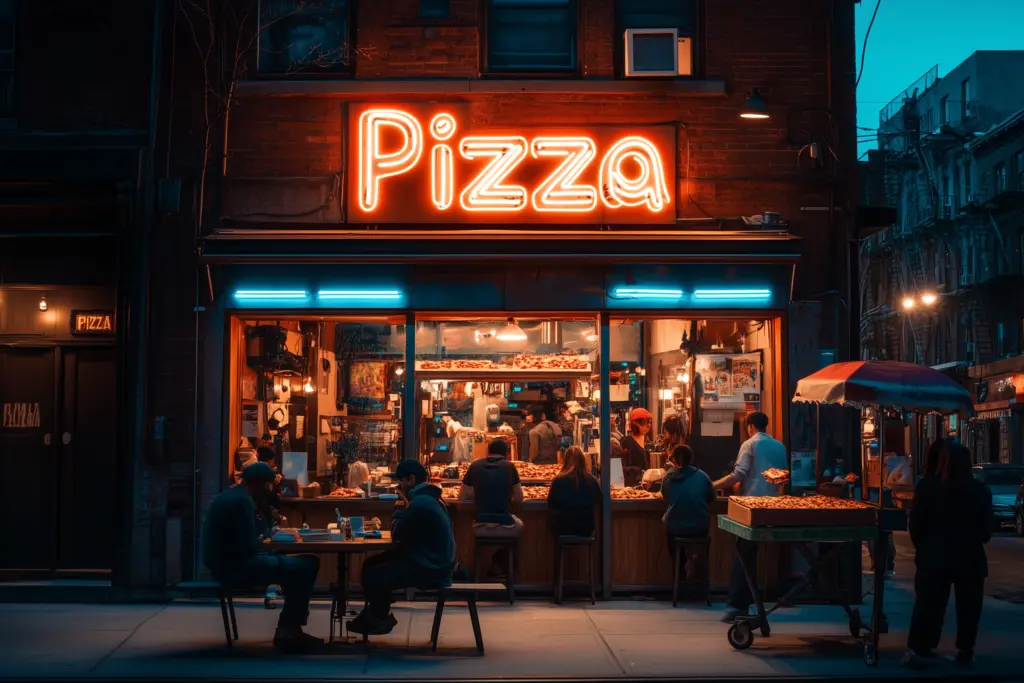
Yet, despite corporate influence, the heart of pizza remains in local, independent pizzerias. The family-run shop, the hole-in-the-wall slice joint, the food truck selling fresh pies-these places continue to define American pizza culture far more than any chain ever could.
Pizza as a Unifying Force in American Society
Few foods bring people together like pizza. It is the default party food, the staple of movie nights, birthdays, and office gatherings. It is the ultimate compromise meal, a food that satisfies both children and adults, vegetarians and meat lovers, the simple eater and the adventurous gourmet.
Pizza does not discriminate. It is loved across political divides, social classes, and regional differences. It is as much a part of working-class diners as it is upscale farm-to-table restaurants. It is served at Super Bowl parties and at late-night diners after long nights out.
Even in moments of crisis, pizza remains a universal comfort. After natural disasters, it is often one of the first foods delivered to those in need. During the pandemic, pizzerias across the country stayed open, feeding essential workers and struggling families.
Pizza is the food that always shows up. It is there when times are good. It is there when times are tough. It is there when nothing else makes sense.
The Future of Pizza in America
As American culture evolves, so does its pizza. Artisanal and gourmet pizzerias now focus on high-quality ingredients and traditional techniques, returning to the old ways while still embracing new ideas. Plant-based pizzas, alternative flours, and fusion toppings reflect the changing tastes of modern consumers.
At the same time, pizza has become a platform for political and social expression. Fundraisers, activism events, and protests frequently involve pizza as a way to bring people together. Whether it’s delivering free pizzas to striking workers or organizing charity events through local pizzerias, pizza has become more than just a meal-it is a symbol of unity and action.
Yet, for all its variations and transformations, one thing remains constant: Pizza is America’s food. It represents its diversity, its adaptability, its creativity, and its deep love of communal dining.
No matter where you go in the United States, pizza is there, waiting for you. It is a reflection of the country itself-messy, varied, sometimes imperfect, but always something worth sharing.
As long as there are tables to gather around and slices to pass, pizza will remain the beating heart of American cultural identity.